•  

Chromatic Authority: The Attributes of Gray in Design

GrayColor TheoryCommanding Gray: Balance and Relativity

Color Scheme - 2025 - Three Philosophers

Gray exists as the transitional space between white and black. To the casual observer, it may seem merely 'dull' or 'unnoticeable,' often overlooked in favor of more vibrant hues. However, in the world of design, the mastery of white, gray, and black is paramount.

Gray offers a vast spectrum of effects—from instilling a sense of calm to cultivating an air of luxury. For any designer, learning to control this subtle shade is a crucial rite of passage toward achieving a higher level of expressive power.

Please note that the color theory pages on this site prioritize practical application. Definitions and interpretations of grayscale, monochrome, and neutral tones can vary widely; therefore, it is highly recommended to consult standard professional texts for further reference.

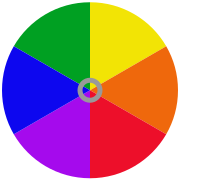
Wavelength Range

Color Wavelength
Purple 380–450 nm
Blue 450–495 nm
Green 495–570 nm
Yellow 570–590 nm
Orange 590–620 nm
Red 620–750 nm

Color Theory Color Chart Gray

Grayscale is a term primarily used in the printing industry to describe images composed exclusively of shades of gray, distinct from simple 'black and white' or 'monochrome.' The term 'scale' refers to a gradual progression of values and is not inherently tied to the color gray itself. In its purest form, gray does not belong to any specific hue; it exists in a state of zero saturation.

The Psychological Attributes of Gray

Positive Neutrality, Wisdom, Intellect, Futurity, Resignation, Stability, Dignity, Compromise
Negative Detachment, Lifelessness, Dampness, Hibernation, Tedium

Gray embodies a unique duality, seamlessly blending refined elegance with a sense of lingering tedium.

Please note that the masterpieces and AI-generated works featured in this section are not strictly limited to the definition of gray. Instead, they encompass works primarily based on white and black tones—monochromatic expressions characterized by their rich gradations. For our purposes, these may be understood in the general sense of 'black and white' artistry.

Gray in Masterpieces: The Case of Caravaggio

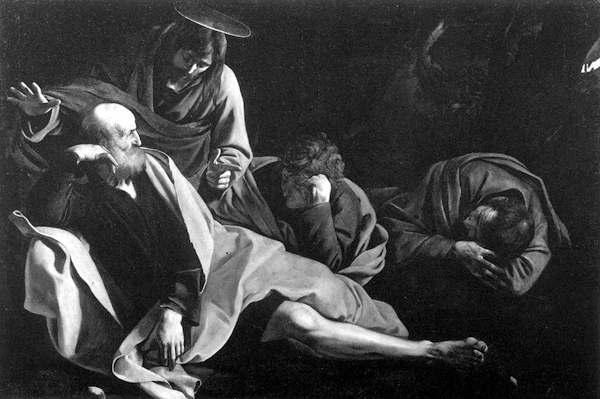
caravaggio Christ on the Mount of Olives

Christ on the Mount of Olives - 1604 - Caravaggio

A work by Caravaggio, tragically destroyed during the war. Through his masterful command of chiaroscuro—the interplay of light and shade—he left behind a body of work that rivals the greatest masterpieces of the Renaissance. Viewing his art in grayscale makes his extraordinary vision even more distinct, bringing the brilliance of his composition into sharper focus.

Gray in Masterpieces: The Case of Aubrey Beardsley

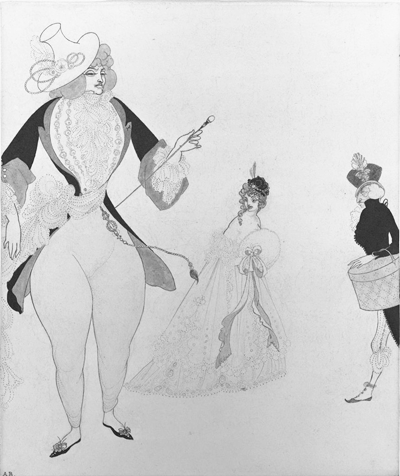
Aubrey Beardsley D'Albert in Search of His Ideals

D'Albert in Search of His Ideals - 1897 - Aubrey Beardsley

There are illustrators like Aubrey Beardsley who established their style as a form of art. Calligraphy and manga also exist in the world of gray or black and white, but can you see what distinguishes this work from a simple comic panel? It is how the solid black areas of the dresses on both sides and the head of the central figure form a single composition. This sense of arrangement and attention to detail is likely what elevates Beardsley's work to the level of art.

Franz Kline, who established his status as an Abstract Expressionist, is said to have been influenced by Japanese calligraphy; his work is characterized by its powerful composition. Similarly, in the world of photography—though some artists occasionally seem to overproduce their work—composition remains a vital element in elevating the quality of a piece. We should recognize the importance of this structural focus.

Appendix: AI and the Artistic Expression of Gray(Monochrome)

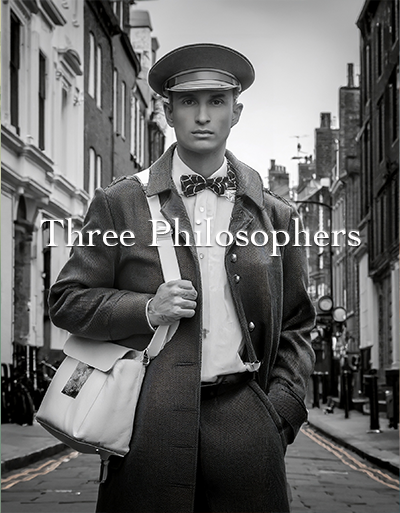
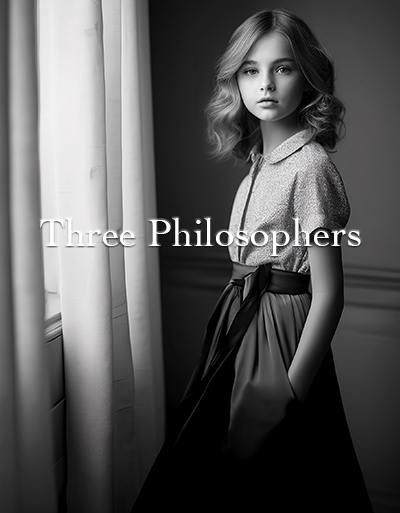
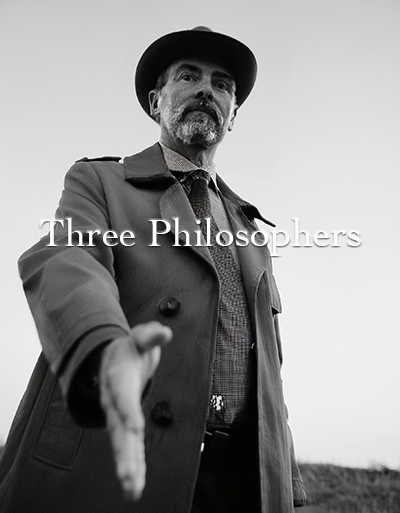
As previously mentioned, I crafted a prompt to generate a piece that aligns with the common perception of black and white art. It is a source of endless fascination to see how far the rapidly evolving AI can push into the realms of photography and fine art.

AI-Generated ArtWork

AI-Generated ArtWork - Prompted by Three Philosophers

AI-Generated ArtWork

AI-Generated ArtWork - Prompted by Three Philosophers

AI-Generated ArtWork

AI-Generated ArtWork - Prompted by Three Philosophers

Summary

In fact, this site itself—especially the desktop version—utilizes a diverse range of grays. When designing a brand identity, I often repeat adjustments at the 1/255 level, time and time again, to cultivate an air of luxury. Because color is inherently relative, even a minute change of 1/255 can drastically shift the overall impression.

Furthermore, subtle differences in negative space and the nuance of gray shades significantly impact the final quality. For those moving from beginner to intermediate levels, daily discipline in mastering these details is indispensable.

Color Theory (Basic)
purple
blue
green
yellow
orange
red
gray
Color Theory (Advanced)
Analogous / Monochrome / Tetrad / Triad / Dyad / Relativity
Business
Fonts
Avenir / Baskerville / Bodoni / Caslon / Copperplate Gothic / Didot / DIN / Futura / Garamond / Gill Sans / Helvetica / Myriad / Optima / Palatino / San Francisco / Snell Roundhand / Trajan / Zapfino
Psychology
Default Effect / Endowment Effect / Framing Effect / Hindsight Bias / Heuristics / IKEA Effect / JND / Mental Accounting / Nudge / Prospect Theory / Selection Options