TP Service
 About
About
Principal in Strategic Design & Abstraction
 Consulting Service
Navigating the Leap in Product Management
 AI-Era Value:
Unrivaled Expertise
Business / UIUX
 Dieter Rams
10(→3+2) Principles for Good Design
 Theory
A Professional Perspective: the Golden Ratio
 UI Design
Four essntial steps of Micro Interactions
 Behavioral Economics
Utility:The Psychological Wallet and the Complexity of Product Growth
 PdM / CPO
Navigating the Core: The Evolution of a Product Designer
 UX Framework
The Pros and Cons of User Interviews
Art
 Marcel Duchamp
Marcel Duchamp And Modern Art
 Donald Judd
Minimalism and Abstraction
 Storm Thorgerson
Intentional Ambiguity
Product
 King Sun & Pipistrello
An Elegant Table Lamp
 Danish Minimalism
Futuristic design that remains timeless.
 PH 4/3 lamp
Object's presence and its harmony with the space.

GreenColor TheoryCommanding Green: Balance and Relativity
Color Scheme - 2025 -
Green provides boundless stability, yet it also carries a quiet strength—a refusal to conform, choosing instead to live by its own internal standards. As a symbol of intellect, it fosters logical solutions and leads the way to further discovery.
Wavelength Range
| Color | Wavelength |
|---|---|
| Purple | 380–450 nm |
| Blue | 450–495 nm |
| Green | 495–570 nm |
| Yellow | 570–590 nm |
| Orange | 590–620 nm |
| Red | 620–750 nm |
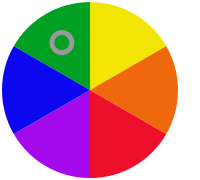
Passing through the cold wavelengths of blue, green emerges as a calm frequency before the intense, piercing light of yellow and orange. Given its inherent stability, green often serves as a foundation; within a triadic relationship, it acts as a quiet anchor that supports and balances the radiant intensity of its counterparts.
The Psychological Attributes of Green
| Positive | Fairness, Stability, Logical, Self-will, Perfectionism |
|---|---|
| Negative | Indecisiveness, Passivity, Abstractness |
Even in a state of passivity, green remains in constant pursuit of knowledge and understanding. When utilizing this hue, one must be mindful of its 'depth'; the specific shade chosen will determine the level of profound insight it conveys.
Green in Masterpieces: The Case of Paul Cezanne
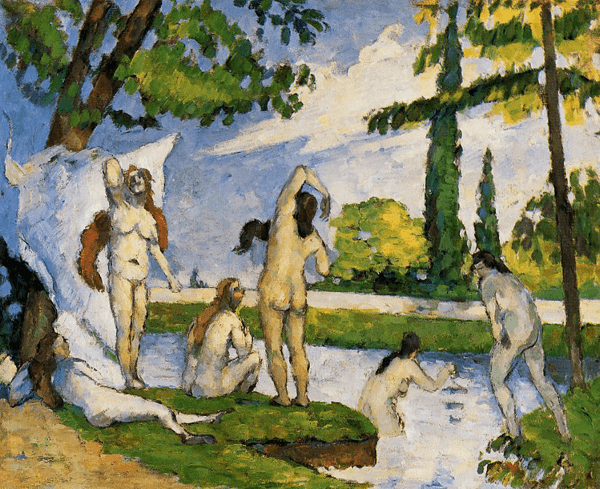
Bathers - 1874-1875 -
In this masterpiece by the Impressionist master, Cézanne avoids assertive colors, choosing instead to capture gentle light and human warmth. The clouds blend with the sky, the trees with the air, and the people merge naturally into the landscape.
Green in Masterpieces: The Case of Vincent van Gogh
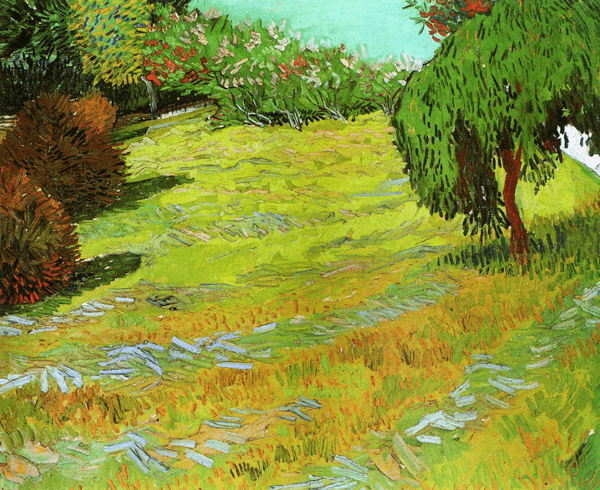
Sunny Lawn in a Public Park - 1888 -
In this landscape by Van Gogh, the volume of the lush vegetation is so vivid that one can almost feel the sunlight and the movement of the wind. Subtle accents of reddish-brown serve to anchor the composition. While green dominates the canvas, the yellowish tones in the foreground and the pale emerald green in the background—where the air and foliage seem to merge—are used to masterful effect.
Appendix: AI and the Artistic Expression of Green
Green is a color that brings stability to a composition, and its ability to temper the intense 'glare' of its complementary color, red, is truly noteworthy. Harmony can be achieved simply by subtly shifting the tones of each element; this allows for a soft and calm expression that grounds the entire image.
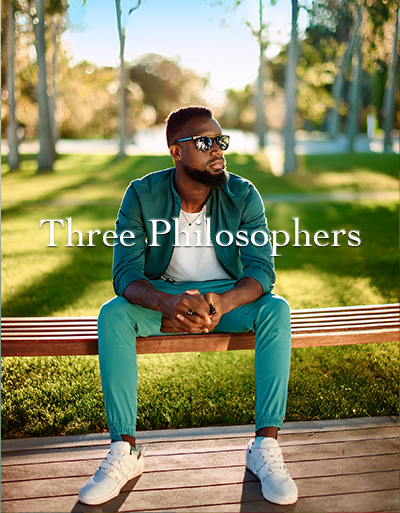
AI-Generated ArtWork - Prompted by
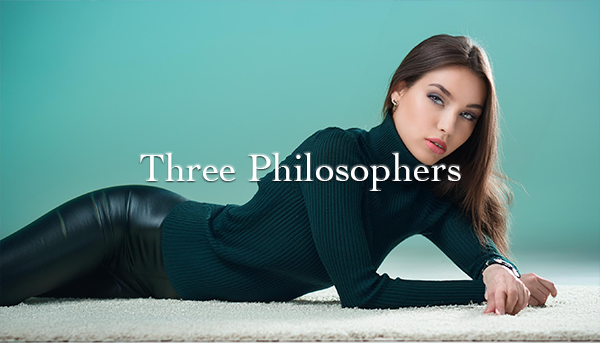
AI-Generated ArtWork - Prompted by
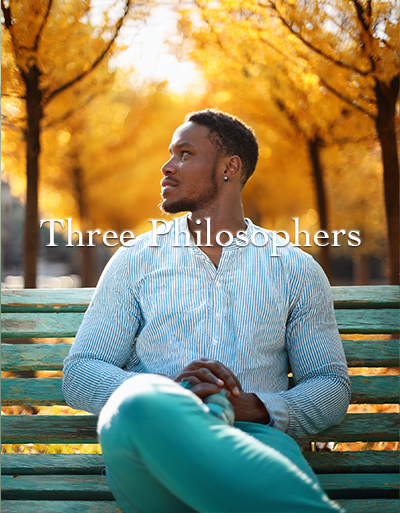
AI-Generated ArtWork - Prompted by
Summary
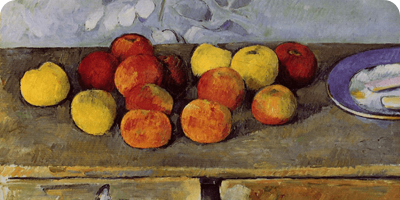
To summarize, green brings stability and healing, as seen in the paintings of Van Gogh. This effect extends to digital environments; even with complex web applications, green helps reduce fatigue during long periods of use. It is essential to recognize the distinct roles of these two colors: while blue can create a sense of urgency, green acts as a stabilizing force that maintains control.


TP Service
About
Principal in Strategic Design & Abstraction
Consulting Service
Navigating the Leap in Product Management
AI-Era Value:
Unrivaled Expertise
Business / UIUX
Dieter Rams
10(→3+2) Principles for Good Design
Theory
A Professional Perspective: the Golden Ratio
UI Design
Four essntial steps of Micro Interactions
Behavioral Economics
Utility:The Psychological Wallet and the Complexity of Product Growth
PdM / CPO
Navigating the Core: The Evolution of a Product Designer
UX Framework
The Pros and Cons of User Interviews
Art
Marcel Duchamp
Marcel Duchamp And Modern Art
Donald Judd
Minimalism and Abstraction
Storm Thorgerson
Intentional Ambiguity
Product
King Sun & Pipistrello
An Elegant Table Lamp
Danish Minimalism
Futuristic design that remains timeless.
PH 4/3 lamp
Object's presence and its harmony with the space.